Play Therapy Paperwork Checklist: Everything You Need For Your Practice
Whether you're opening your first play therapy private practice (yay!) or refreshing the paperwork you've been using for years (go you!), you’ve likely realised there's a lot more to running a practice outside of the playroom.
From informed consent and intake forms to session notes and reports, having the right paperwork in place helps create a professional experience for caregivers, protects your practice, and saves countless admin hours.
This guide walks you through all the essential play therapy paperwork, with practical tips on what to include and why each document matters.
Little note: Documentation requirements vary depending on your profession, registration board, insurer, and the country or state you practice in. This article is intended as a general guide only. Always ensure your paperwork complies with your local legal, ethical and professional requirements.
Before a family books
Your paperwork starts long before the first play therapy session. The way you communicate with prospective families sets the tone for your practice and often answers common questions before they even reach your inbox.
Consider having templates ready for:
Initial enquiry emails
Booking confirmations
Waitlist responses
Appointment reminders
Cancellation and rescheduling messages
Having consistent communication not only saves time, but also creates a calm and professional experience for families during what can often be a stressful time.
Here’s a little something you might like:
Informed consent and service agreements
Before beginning play therapy, families need clear information about how your practice operates, what they are consenting to, and what they can expect throughout the therapeutic process.
Depending on your practice, your paperwork may include:
Informed consent
Privacy and confidentiality information
Fees and cancellation policies
Service agreements
Telehealth information (if applicable)
Photo or media consent (if applicable)
Taking the time to establish clear expectations early can prevent misunderstandings or ethical dilemmas later, and also helps build trust with caregivers.
Here’s a little something you might like:
Intake paperwork
A thoughtful intake form gives you valuable information before you ever meet the child, and helps you understand a little more about their world.
Depending on your practice, you might collect information about:
Presenting concerns
Developmental history
Family composition
Significant relationships
Medical and mental health history
School or childcare information
Previous supports or therapies
Child strengths, interests and favourite activities
Parent goals for therapy
Remember, the goal isn't to collect every piece of information imaginable; it's to gather information that helps you understand the child's world and informs your clinical thinking.
Here’s a little something you might like:
Session documentation
Session notes are one of the most important pieces of paperwork you'll complete throughout the therapeutic process.
Many new play therapists worry they need to document every toy the child touched. I definitely was guilty of it in my early years!
In reality, your notes should focus on the clinically meaningful aspects of the session, such as:
the child's presentation
significant play experiences
emerging play themes
therapeutic responses
clinical observations
plans for future sessions
Whether you prefer SOAP, DAP or BIRP notes, having a consistent documentation framework can make writing notes quicker and more meaningful.
Here’s a little something you might like:
Read: How to Write Play Therapy Session Notes
Caregiver communication paperwork
Supporting caregivers is a super important part of the therapeutic process, and documenting these conversations is just as important as documenting the child's play sessions.
Depending on your practice, this might include:
Parent consultation notes
Caregiver updates
Changes in goals
Home observations
Agreed action plans
Updated contact or family information
Keeping these records organised helps you track progress over time and ensures important information isn't lost between sessions.
Here’s a little something you might like:
Reports and professional communication
There may be times when you need to communicate with other professionals involved in a child's care. Clear, well-structured reports help communicate your observations while supporting collaborative practice.
Examples may include:
Progress reports
Review reports
Letters to referrers
Case conference summaries
Funding reports (where applicable)
Remember to document observations objectively, distinguish observations from clinical hypotheses, and write with the expectation that families or other professionals may read your reports.
Here’s a little something you might like:
Build a paperwork system
One of the biggest mistakes I see new play therapists make (and one I made too!) is creating paperwork one document at a time. The intake form looks different from the consent form. Session notes vary every week. Reports all follow different formats.
Before long, your paperwork becomes a big ol’ mess.
Instead, I suggest building a paperwork system that supports the entire client journey: from the first enquiry through to termination.
When your documents use consistent language, follow similar layouts and reflect your clinical approach, paperwork becomes quicker to complete and creates a more professional experience for the families you support.
Looking for ready-to-use play therapy paperwork?
If you'd rather spend your time in the playroom (and enjoying your downtime) than designing forms from scratch, I've created a collection of editable paperwork resources specifically for play therapists.
You can start by exploring my play therapy private practice paperwork resources.
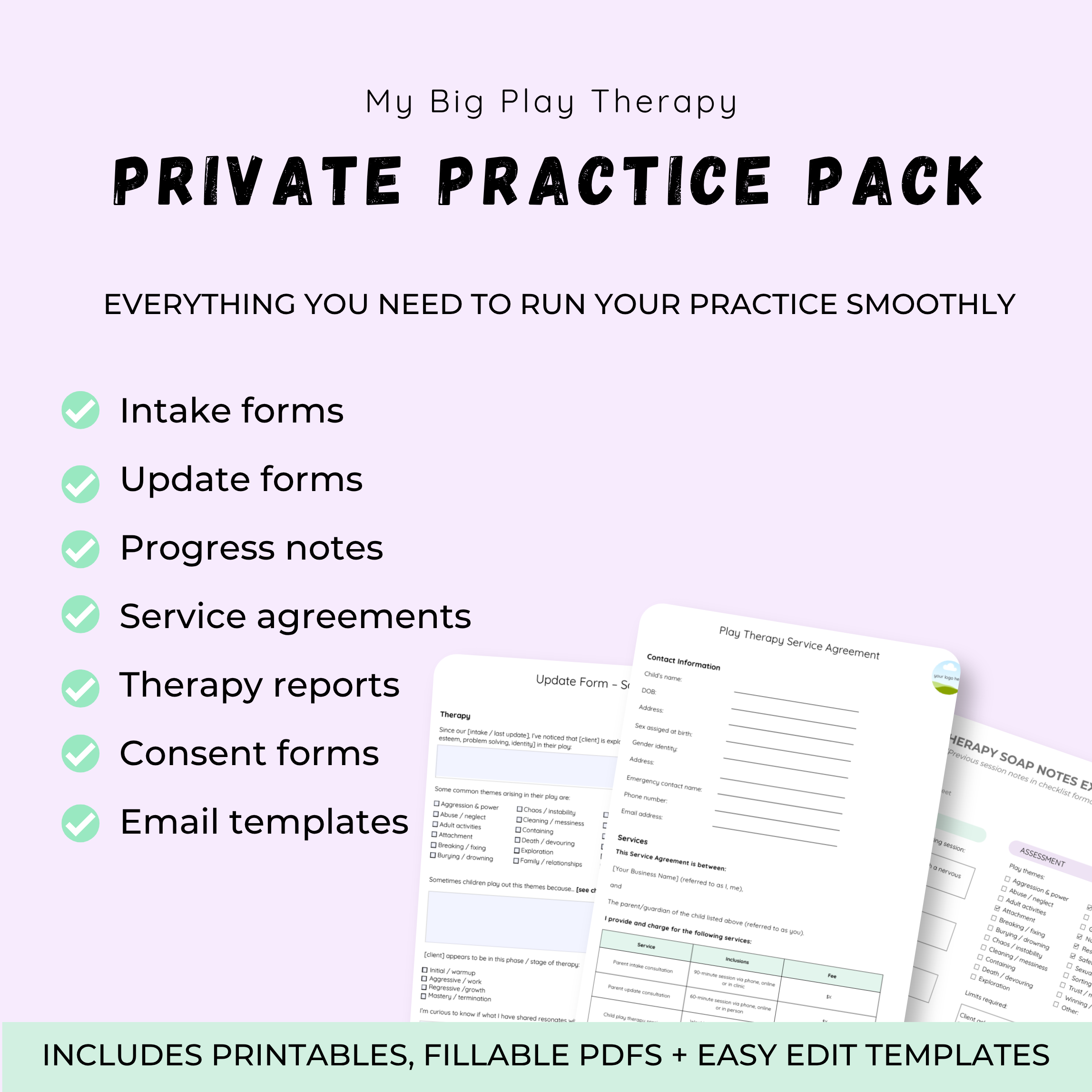
Or check out My Big Private Practice Pack, which includes:
Informed Consent Templates
Service Agreement Templates
Intake Forms
Client Update Forms
Progress Note Templates & Examples
Report Templates
Email & SMS Scripts