10 Questions to Ask Parents During a Play Therapy Intake
If you've ever felt anxious before a play therapy intake, you're not alone! Parent intake appointments can feel like a lot of pressure. You're meeting a family for the first time, trying to establish rapport, remembering what information you need to collect, and holding space for parents who may be feeling worried, exhausted, guilty, or uncertain.
Having a framework of thoughtful questions can help you feel more prepared, so you spend less mental energy wondering what to ask next and can focus on the family's story.
The quality of your intake conversation also often shapes the therapeutic relationship before the child even enters the playroom.
Below are ten questions I ask (or adapt) during a play therapy intake, along with why they're valuable in child-centred play therapy.
1. What brings you to play therapy now?
This sounds simple, but it's often one of the most revealing questions – and it can really set up the rest of the intake session. Invite parents to tell the story in their own words. Listen for what prompted them to seek support now rather than six months ago.
You might hear about:
behavioural changes
anxiety
school difficulties
friendship concerns
grief or family changes
emotional regulation challenges
This will likely give you clues to support your goal setting and intervention planning.
2. What worries you the most about what’s happening?
After understanding why the family has sought support, this question helps you explore what feels most significant to the caregiver.
Two families might describe the same behaviour but have very different worries. One parent may worry about their child's emotional wellbeing, while another worries about what the future might hold if things don't improve.
Understanding a parent's biggest concern helps you appreciate the meaning they've attached to their child's behaviour or experiences. It can also highlight expectations, misconceptions, or fears that may need to be gently explored throughout the therapeutic process.
As they respond, listen for both the content of what they're saying and the emotion behind it. This can provide valuable insight into the family's experience and help guide your conversations with empathy and curiosity.
3. How will you know when things are better?
Parents often arrive with goals like "I want them to behave better." It can be helpful to gently explore what that would actually look like.
Ask questions such as:
What would your child be doing differently?
What would family life look like?
What would your child say if things were going well?
What might their teachers say?
These answers help translate broad concerns into meaningful therapy goals while keeping the focus on the child's wellbeing rather than simple compliance.
4. What are your child's greatest strengths?
It's easy for an intake to become problem-focused. This question shifts the conversation, which is why I often ask about the child’s strengths, interests, and unique qualities after the caregiver has shared the presenting problems.
Parents might describe their child as:
creative
kind
funny
determined
caring
curious
Knowing a child's strengths helps you begin forming a balanced understanding of who they are beyond the concerns that brought them to therapy, and also inform your treatment planning.
5. Can you tell me about your child's development?
Exploring various areas of child development can help you better understand the child’s presenting problems, so that you can tailor your interventions to their needs and worldview.
Rather than working through a rigid checklist, explore areas such as:
pregnancy and birth
early milestones
speech and language
sensory preferences
medical history
neurodevelopmental differences
Bear in mind that if you’re working with children who are in foster care or out-of-home care, the caregiver or support worker may not be able to provide a lot of information about their development; so just capture what you can.
6. Who are the important people in your child's life?
Children don't exist in isolation. There are many individuals, systems and environments that influence and impact their development – both towards and away from their treatment goals.
Ask about:
parents and caregivers
siblings
grandparents
extended family
teachers
close friends
other professionals involved
Understanding the child's support network often highlights both protective factors and areas of stress. It also allows you to begin building a clearer picture of the child’s eco-system, and consider who you may need to consult with further to support the therapy process.
7. How does your child express big emotions?
Every child communicates differently. Some are ‘externalisers’ who clearly exhibit their emotions through their outward behaviour, while others are' ‘internalisers’ who keep it all safely locked up inside.
Parents might describe:
withdrawal
anger
tears
humour
movement
shutting down
seeking comfort
clinginess
This information helps you understand how the child experiences and communicates emotional overwhelm, giving you a greater context when emotions and behaviours arise in the playroom.
8. What usually helps and doesn’t help when your child is upset?
Parents often discover they already have strategies that help support their child during dysregulation and distress.
Ask about:
comforting routines
sensory supports
connection with particular people
preferred activities
things that inadvertently make situations worse
discipline and other approaches parents might be using (successfully or not)
This conversation also provides valuable insight into the parent-child relationship.
9. Has your child experienced any significant life changes?
Children can experience distress from many different events, including:
family separation
moving house
starting school
bullying
illness
death (of a pet, family, friends or other important people in their lives)
trauma
changes in family relationships
You might find that parents struggle to think of impactful events; this is fairly common and so you might need to offer up some prompts (listing a couple of items from the bullet points above) to jog their memory.
Some caregivers may also reflect that a particular event didn't seem to affect their child. While children don't all respond to adversity in the same way, early experiences (including those during pregnancy and infancy) can shape development and later wellbeing. Rather than assuming an event was either impactful or insignificant, stay curious. Gently explore how the child responded at the time and whether caregivers noticed any changes in their behaviour, emotions, relationships, or play in the weeks and months that followed.
10. Is there anything you think I should know that I haven't asked?
Some of the most valuable information emerges towards the end of the intake. Parents may disclose concerns they weren't sure where to mention, or that came up through the intake process.
Giving families permission to share anything else reinforces that this is a collaborative conversation rather than simply completing paperwork – and it also gives you things to consider for treatment planning and future parent update sessions.
Remember: the intake is also about building trust
A play therapy intake goes beyond information gathering; it’s also the beginning of your therapeutic relationship with the family.
Parents are weighing up whether they feel heard and understood. And we know that children will often benefit most when caregivers feel heard, respected, and included throughout the process.
When you approach the intake with curiosity and compassion, you'll likely find you gather richer information while laying the foundations for effective play therapy.
Free Resource: Parent Consultation Scripts
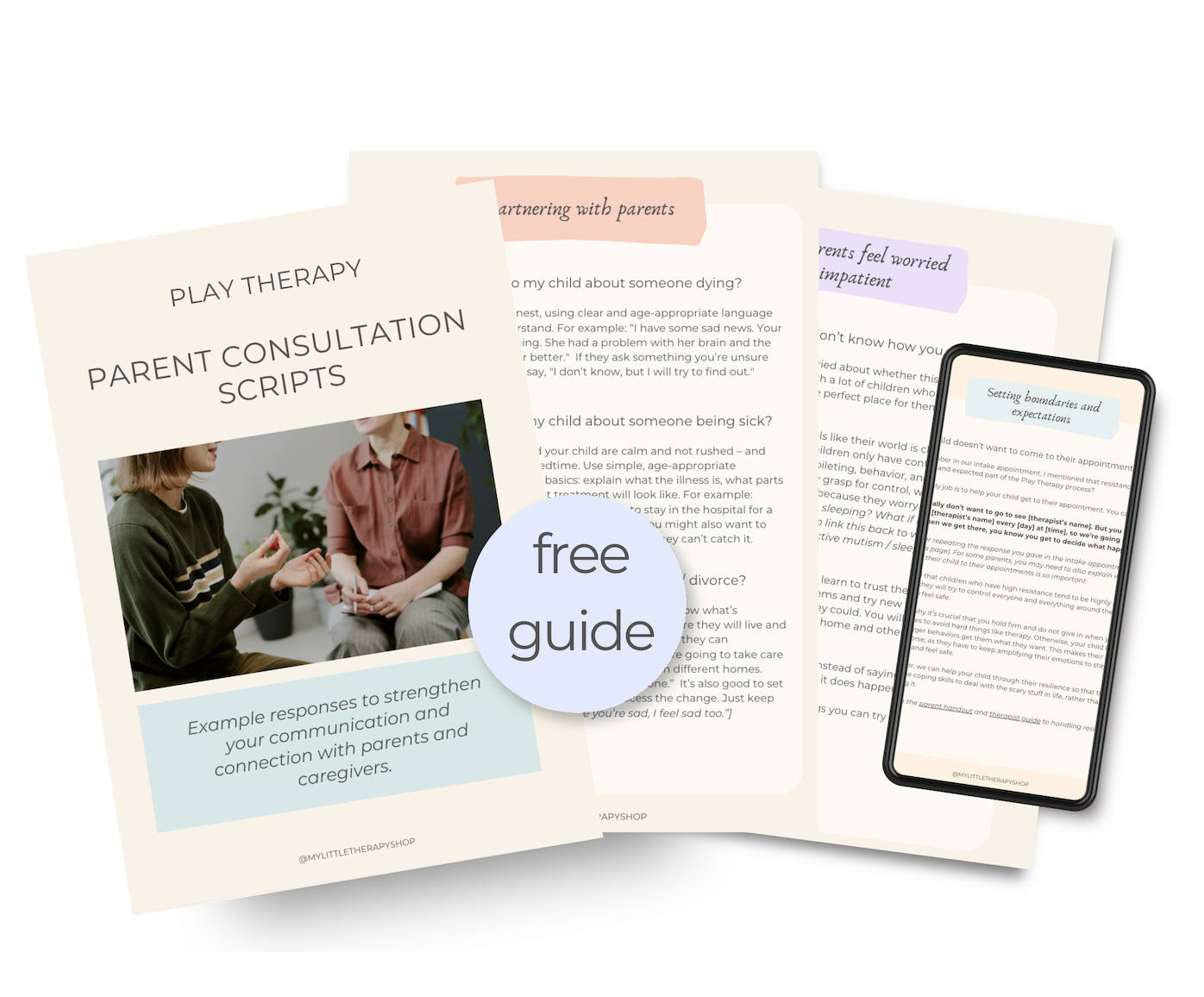
Wondering how to word some of these conversations? I've created a free Parent Consultation Scripts PDF with practical phrases and questions you can adapt during parent meetings, intake appointments, and review sessions.
Want a Complete Play Therapy Intake Pack?
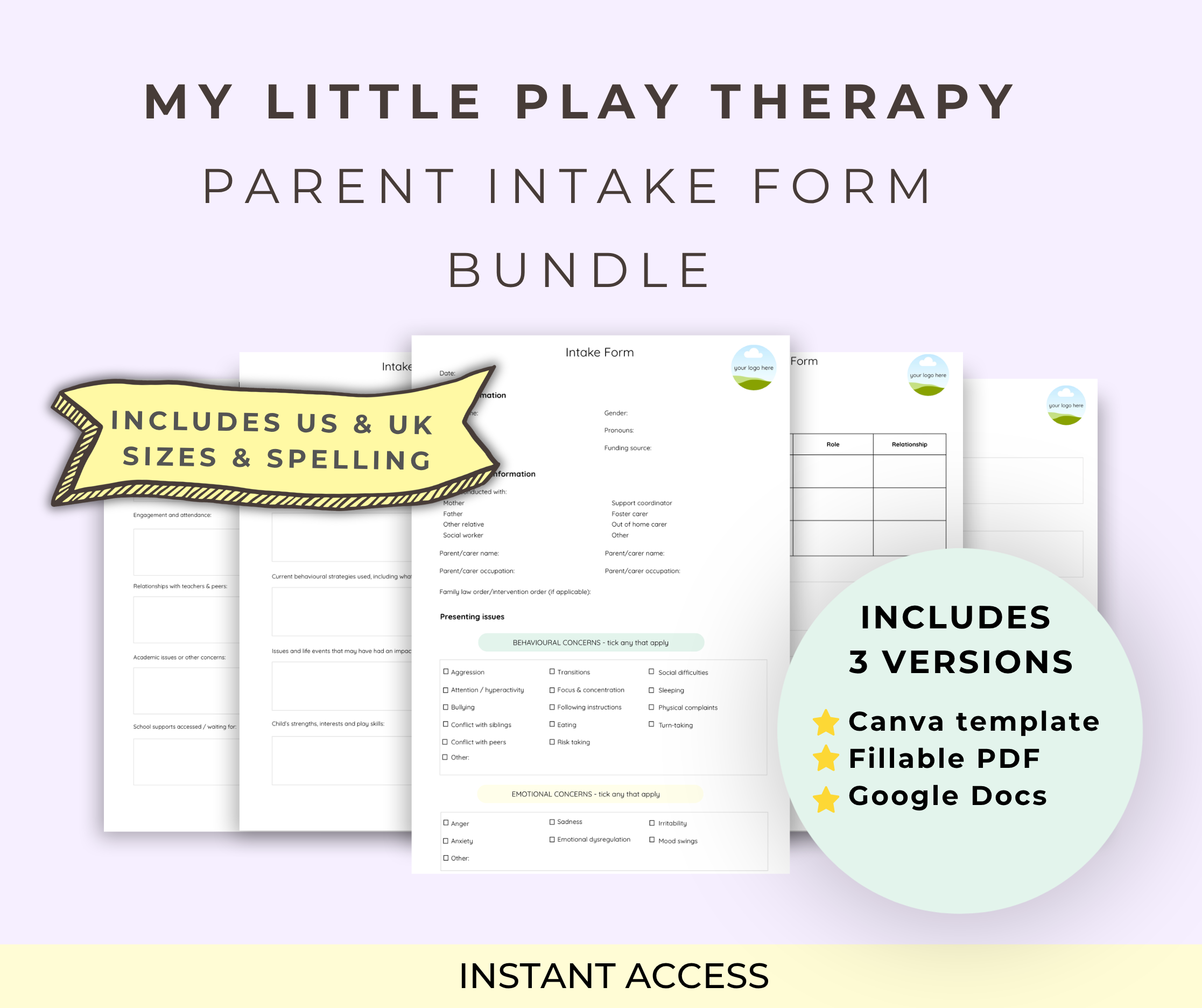
If you're tired of creating forms from scratch, my My Little Parent Intake Form Bundle includes professionally designed, editable forms you can customise to your practice.
Inside you'll find:
comprehensive parent intake forms
developmental history questionnaires
consent documentation
intake checklists
editable templates you can customise for your practice