Sale Price:
$15.00
Original Price:
$30.00
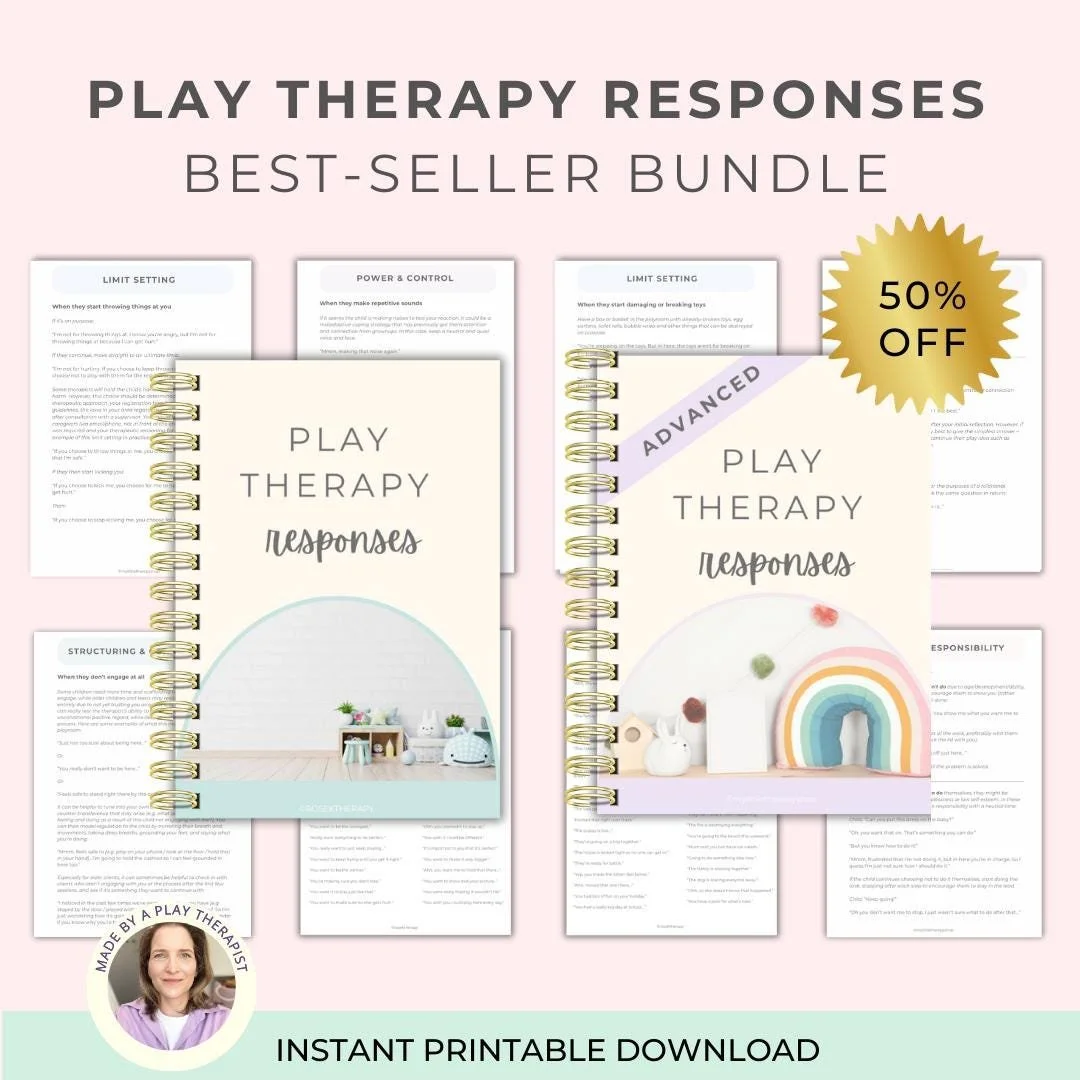
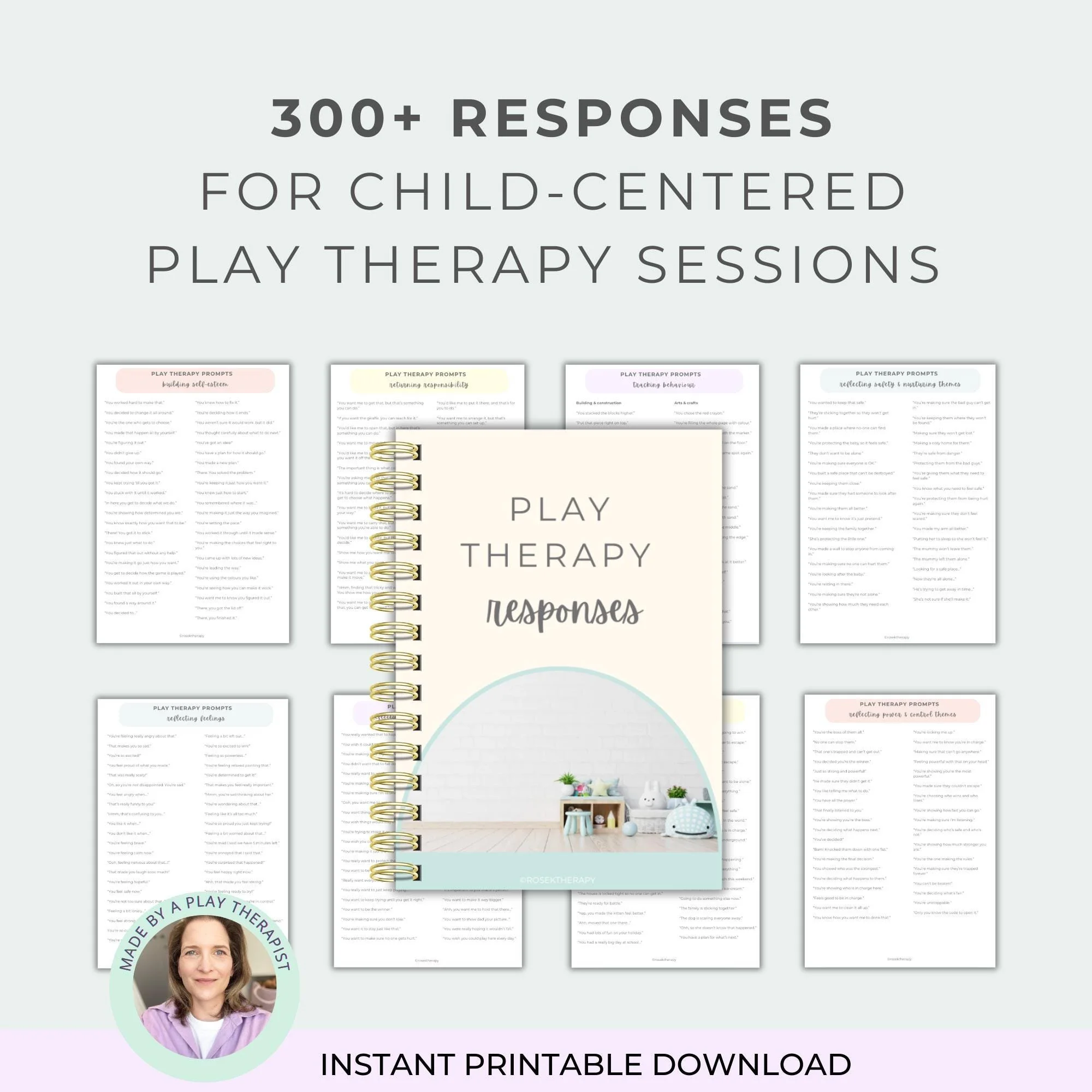
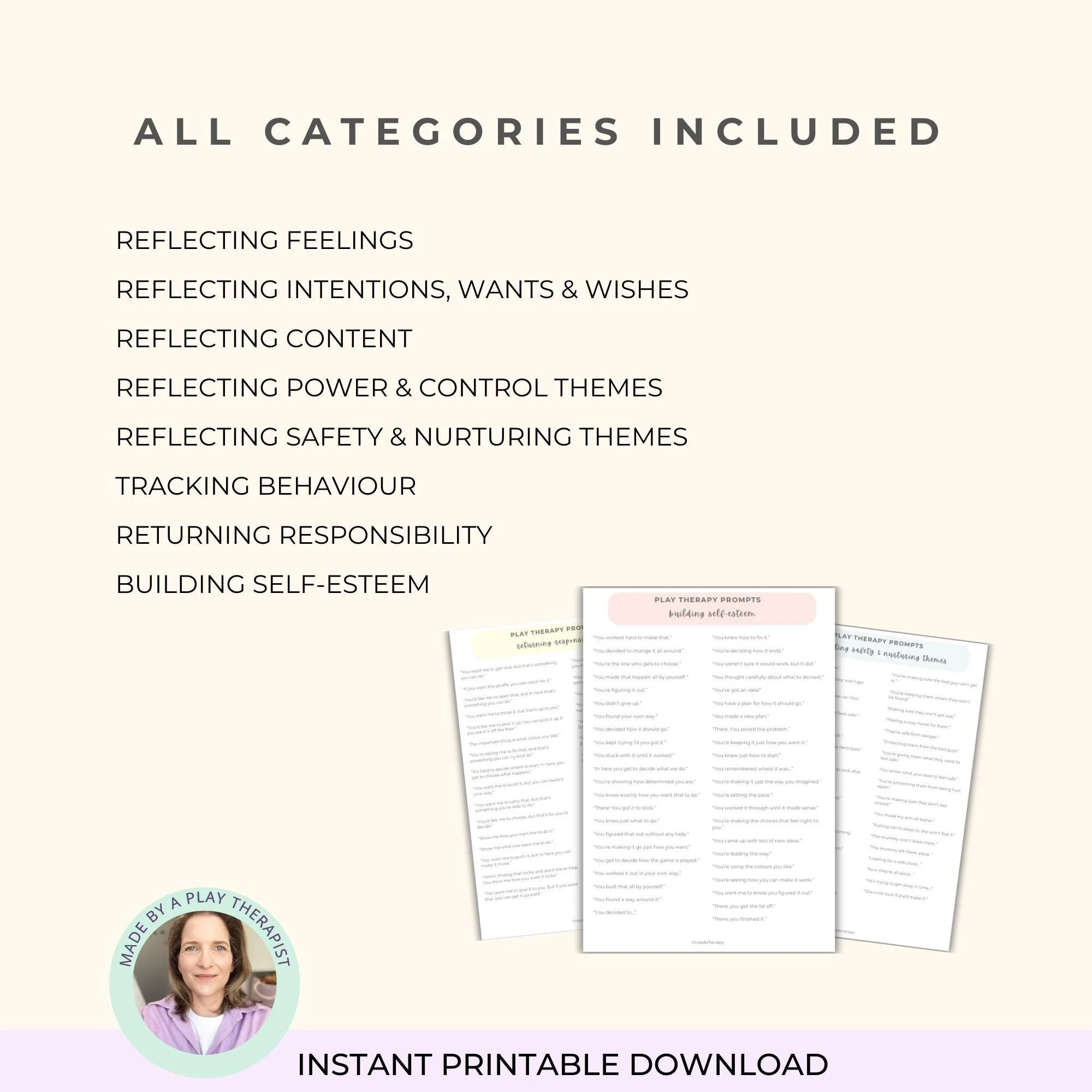
Looking for detailed and effective Child Centered Play Therapy Resources? Whether you’re just starting out or are looking to deepen your therapeutic skills as a play therapist, child counsellor, therapist, psychologist or social worker, this collection of advanced child-centered play therapy responses aims to inspire and guide you in your practice.
WHAT’S INCLUDED
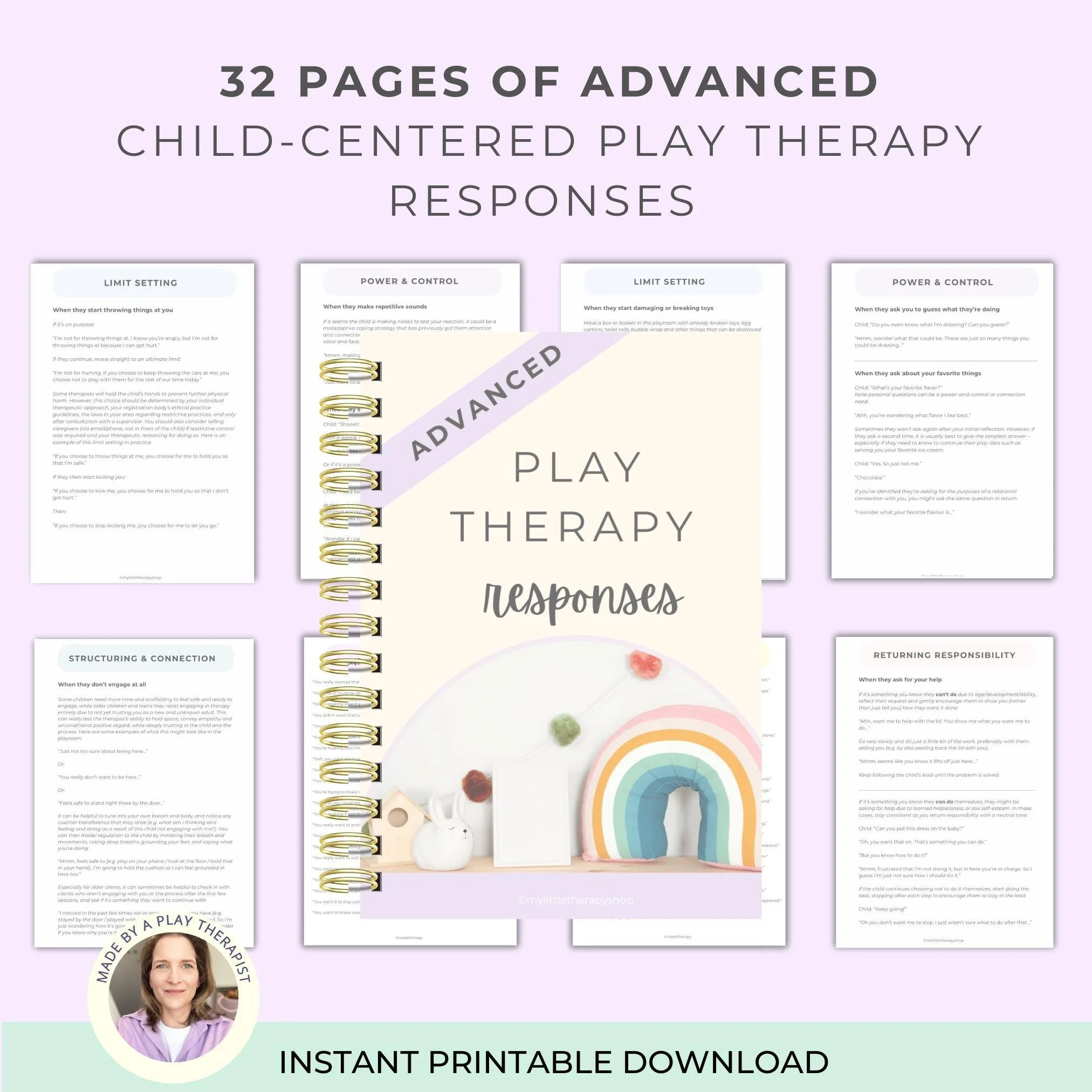
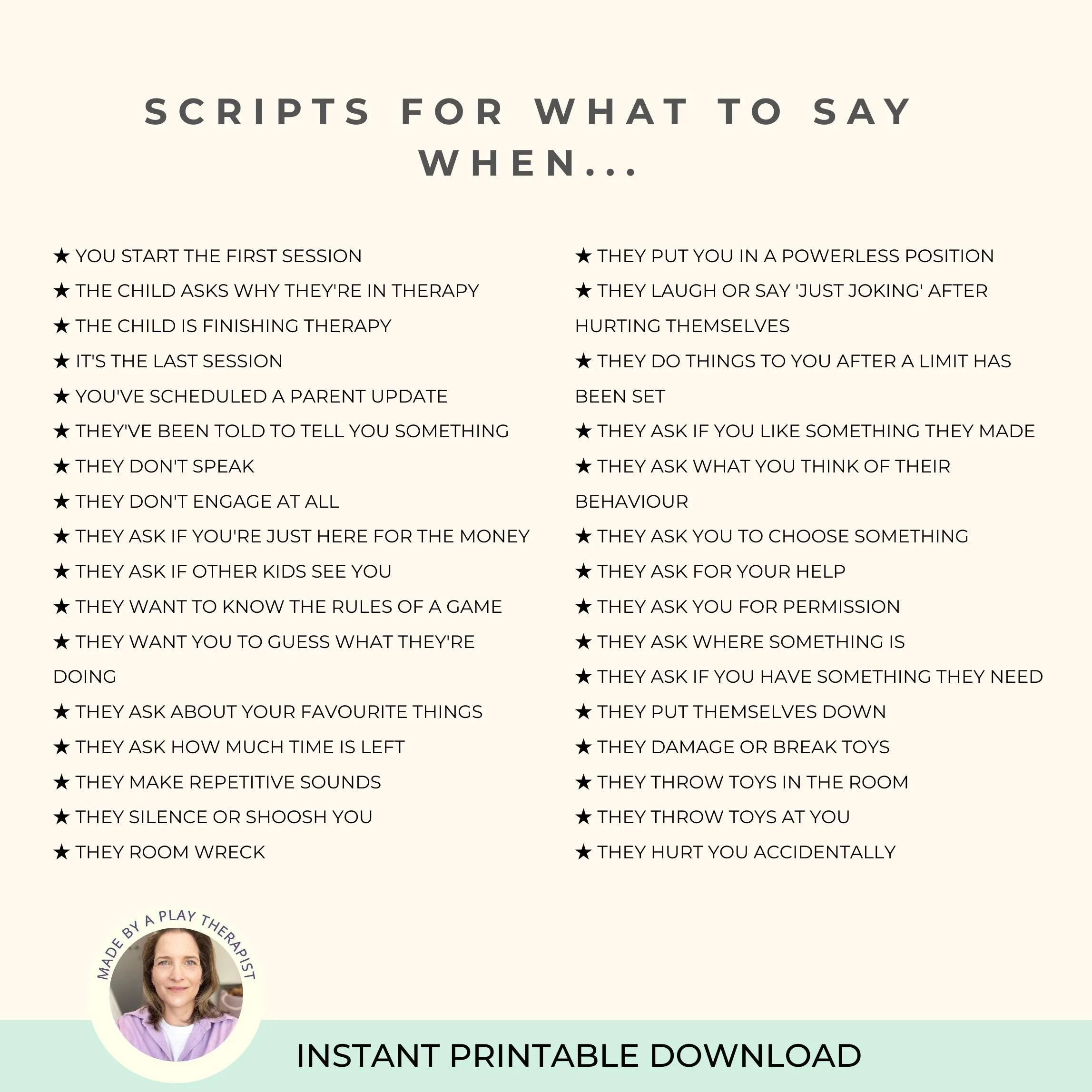
2 PDFs (one A4 size with British spelling, one US letter size with US spelling), with 32 pages of what to say when:
★ you start the first session
★ the child asks why they're in therapy
★ the child is finishing therapy
★ it's the last session
★ you've scheduled a parent update
★ they've been told to tell you something
★ they don't speak
★ they don't engage at all
★ they ask if you're just here for the money
★ they ask if other kids see you
★ they want to know the rules of a game
★ they want you to guess what they're doing
★ they ask about your favourite things
★ they ask how much time is left
★ they make repetitive sounds
★ they silence or shoosh you
★ they room wreck
★ they put you in a powerless position
★ they laugh or say 'just joking' after hurting themselves
★ they do things to you after a limit has been set
★ they ask if you like something they made
★ they ask what you think of their behaviour
★ they ask you to choose something
★ they ask for your help
★ they ask you for permission
★ they ask where something is
★ they ask if you have something they need
★ they put themselves down
★ they damage or break toys
★ they throw toys in the room
★ they throw toys at you
★ they hurt you accidentally
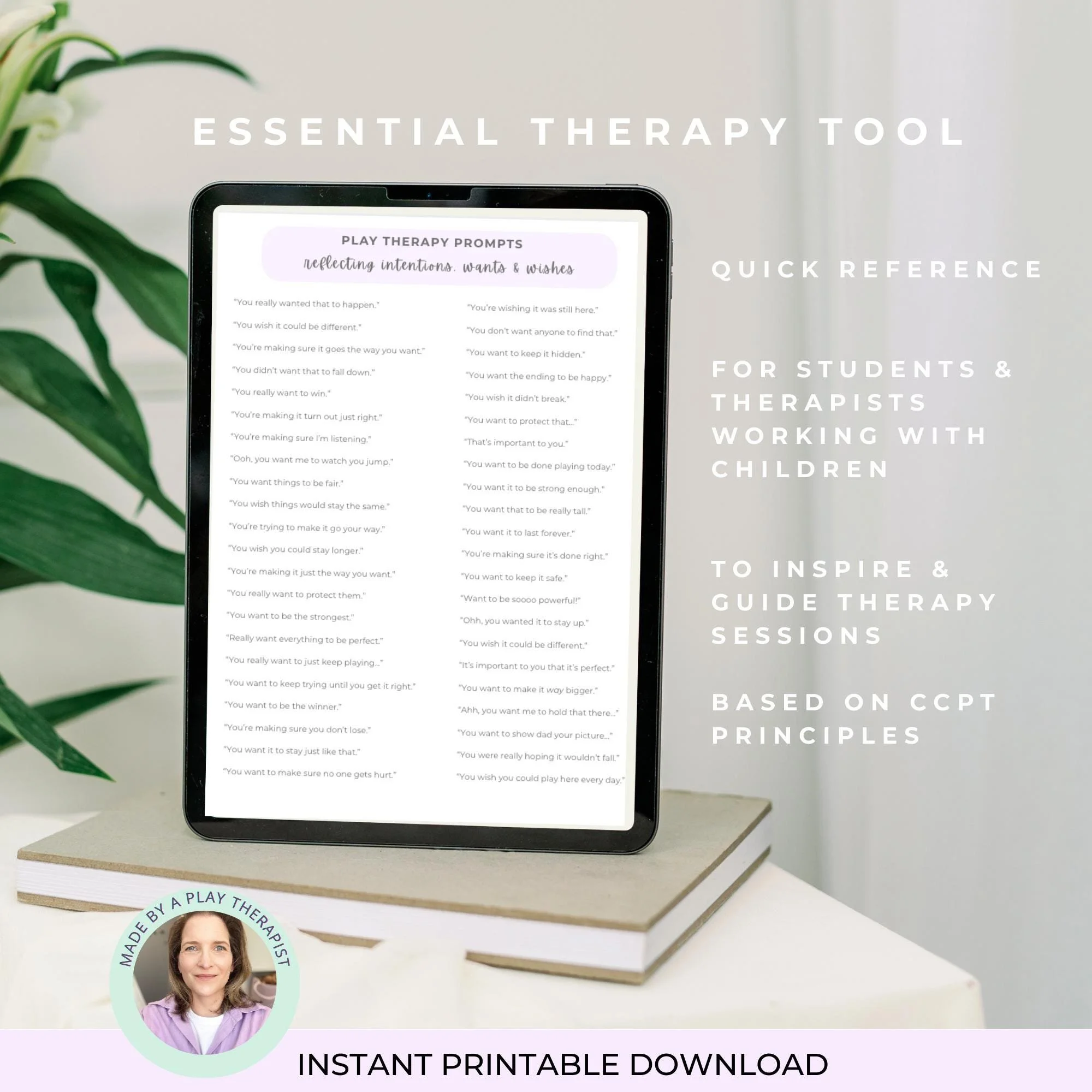
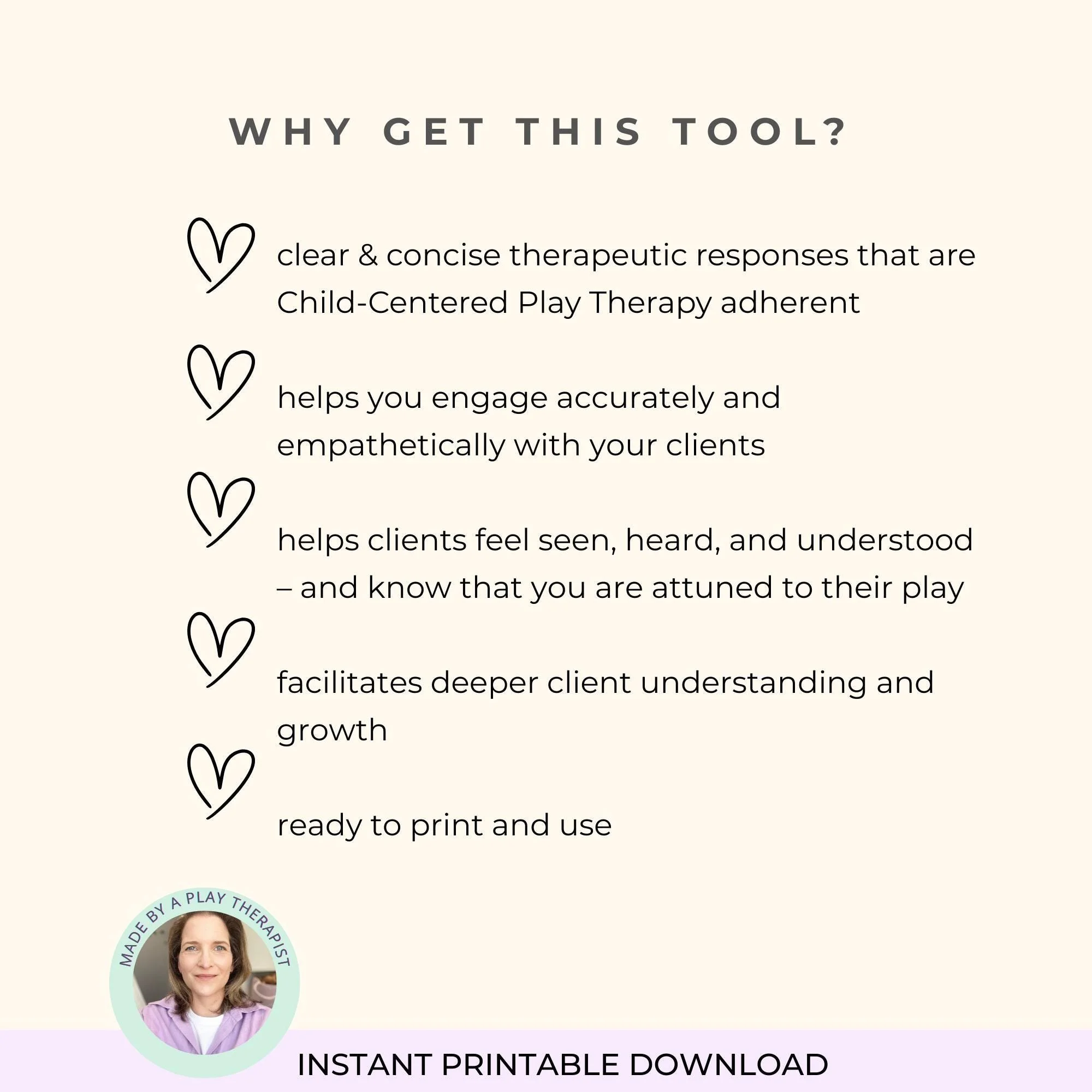
Use these facilitative responses to engage accurately and empathetically with your clients. So that they feel seen, heard, and understood – and know that you are attuned to their play.
NEED TO KNOW
These resources are for personal use and education purposes only. They do not replace supervision, consultation, assessment, therapy, training, or ethical guidelines set by your professional association. You can use them for your own clinical or at-home reference. If you wish to send, share, or redistribute this to parents/teachers/other professionals, you must buy a one-time commercial license. Instant digital download – no refunds or exchanges.
Looking for detailed and effective Child Centered Play Therapy Resources? Whether you’re just starting out or are looking to deepen your therapeutic skills as a play therapist, child counsellor, therapist, psychologist or social worker, this collection of advanced child-centered play therapy responses aims to inspire and guide you in your practice.
WHAT’S INCLUDED
2 PDFs (one A4 size with British spelling, one US letter size with US spelling), with 32 pages of what to say when:
★ you start the first session
★ the child asks why they're in therapy
★ the child is finishing therapy
★ it's the last session
★ you've scheduled a parent update
★ they've been told to tell you something
★ they don't speak
★ they don't engage at all
★ they ask if you're just here for the money
★ they ask if other kids see you
★ they want to know the rules of a game
★ they want you to guess what they're doing
★ they ask about your favourite things
★ they ask how much time is left
★ they make repetitive sounds
★ they silence or shoosh you
★ they room wreck
★ they put you in a powerless position
★ they laugh or say 'just joking' after hurting themselves
★ they do things to you after a limit has been set
★ they ask if you like something they made
★ they ask what you think of their behaviour
★ they ask you to choose something
★ they ask for your help
★ they ask you for permission
★ they ask where something is
★ they ask if you have something they need
★ they put themselves down
★ they damage or break toys
★ they throw toys in the room
★ they throw toys at you
★ they hurt you accidentally
Use these facilitative responses to engage accurately and empathetically with your clients. So that they feel seen, heard, and understood – and know that you are attuned to their play.
NEED TO KNOW
These resources are for personal use and education purposes only. They do not replace supervision, consultation, assessment, therapy, training, or ethical guidelines set by your professional association. You can use them for your own clinical or at-home reference. If you wish to send, share, or redistribute this to parents/teachers/other professionals, you must buy a one-time commercial license. Instant digital download – no refunds or exchanges.

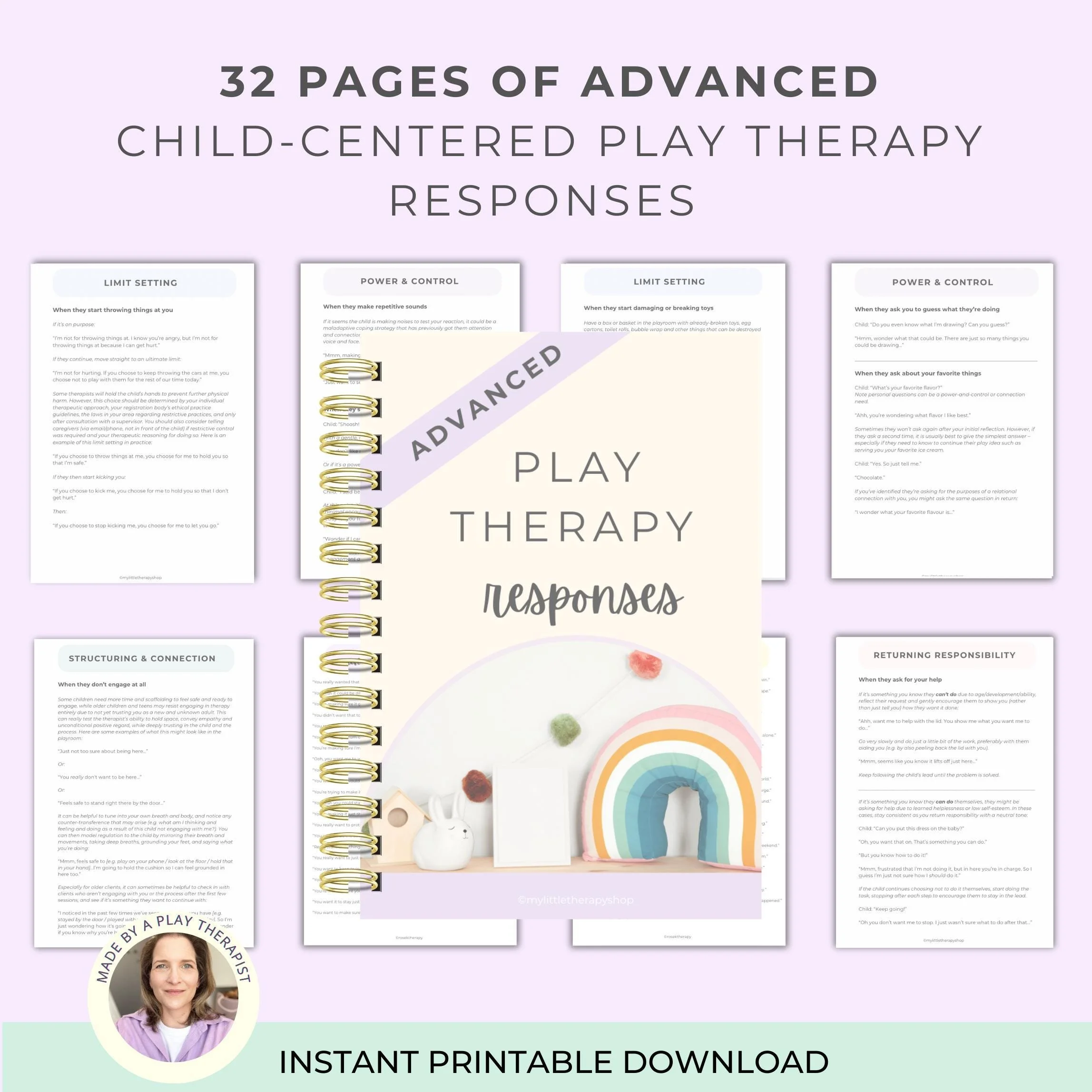 Image 1 of 6
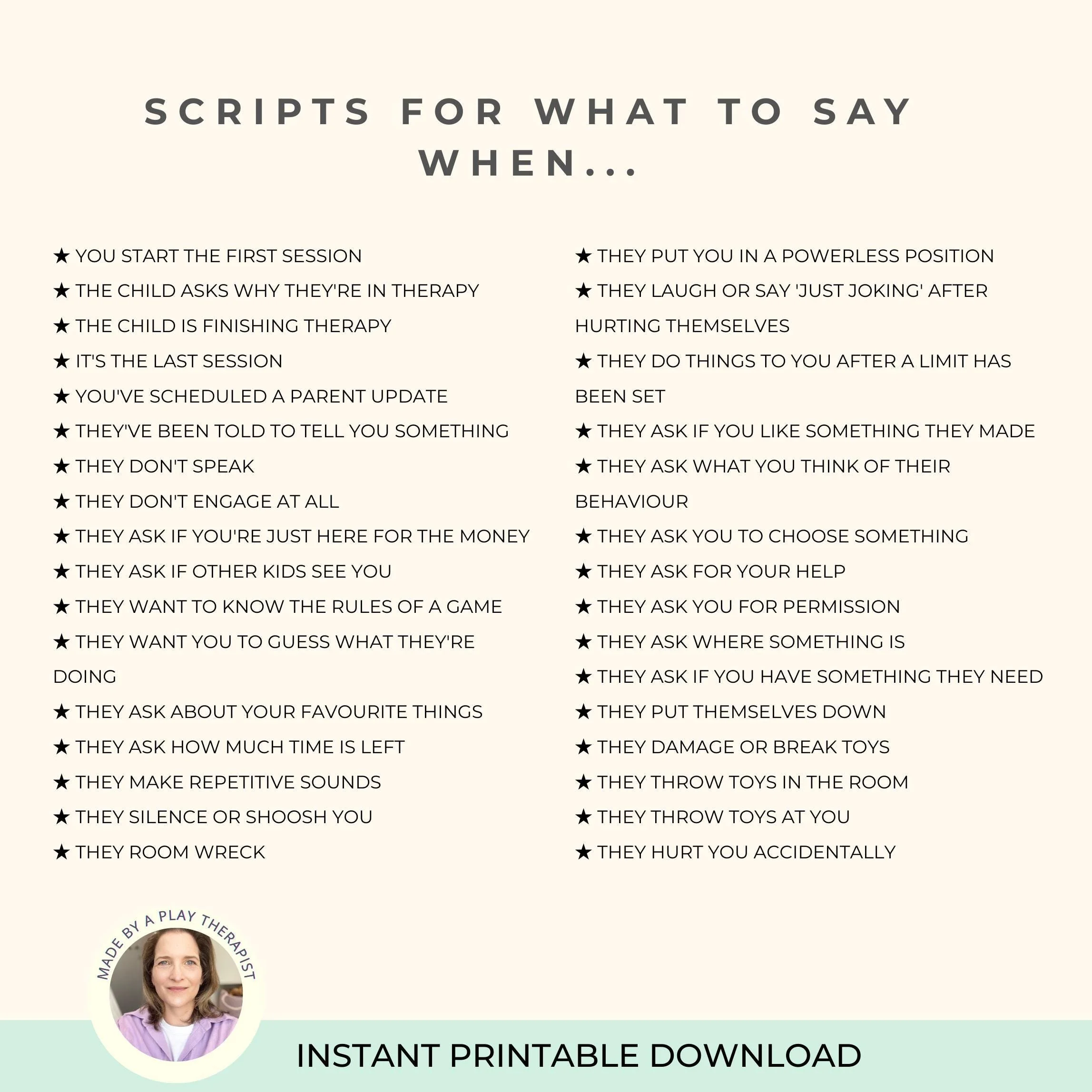 Image 2 of 6
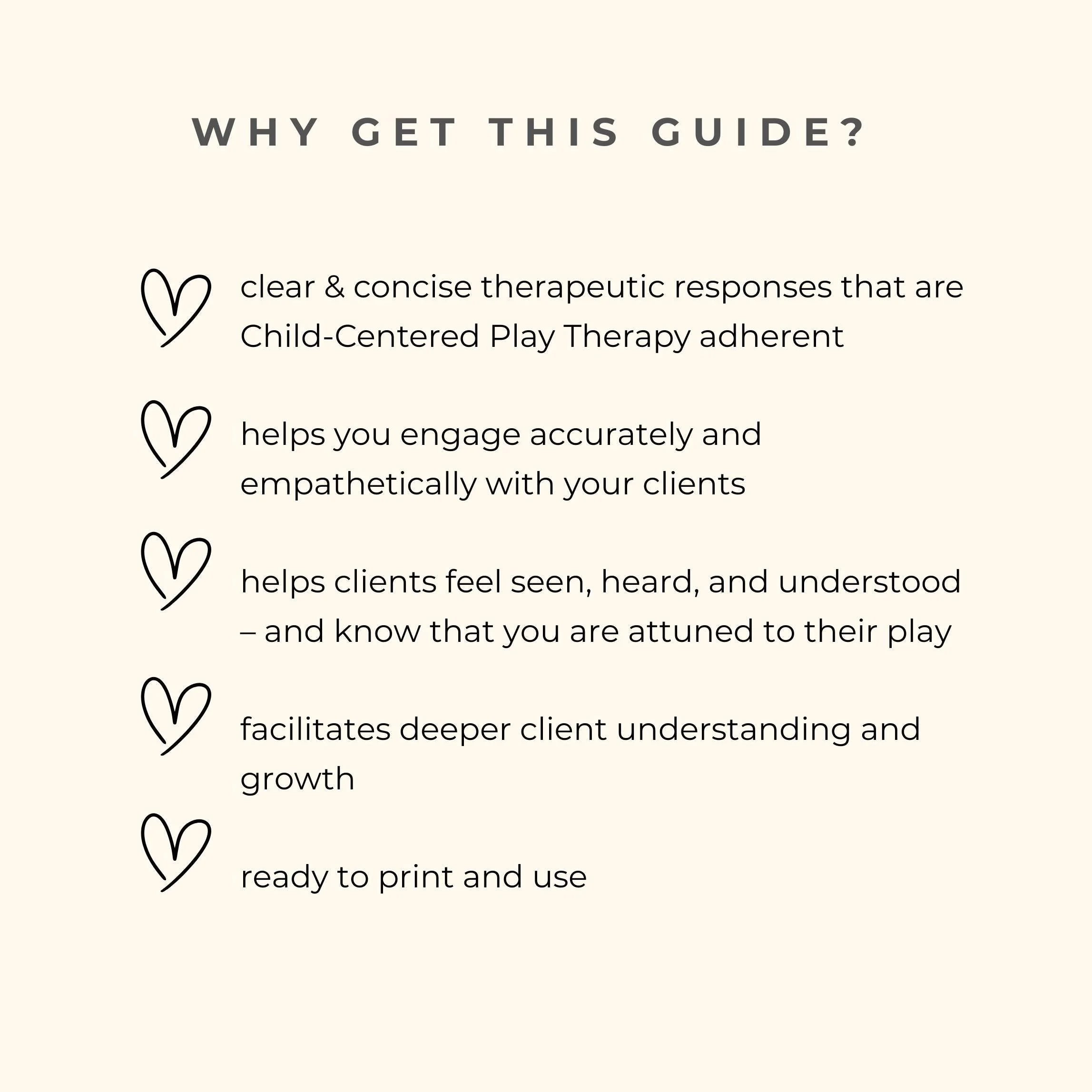 Image 3 of 6
 Image 4 of 6
 Image 5 of 6
 Image 6 of 6